
Billy Bob Thornton Stands Firm: No Apologies for ‘Landman’s’ Raw Edge
In the rugged world of oil rigs and boomtowns depicted in Paramount+’s “Landman,” Billy Bob Thornton delivers a performance that’s as unyielding as the Texas dirt underfoot. As Tommy Norris, a crisis manager navigating the cutthroat oil industry, Thornton embodies a character who’s blunt, profane, and unflinchingly real. But as the series garners both acclaim and backlash for its abrasive tone, Thornton has made his position crystal clear: he’s not apologizing for portraying reality, no matter how uncomfortable it makes viewers. “I won’t dilute reality to make it more comfortable,” Thornton has stated, emphasizing that the show’s characters draw from the authentic grit of working-class life in places like Arkansas and Texas. This stance comes amid growing criticism that “Landman” is too harsh, too politically charged, and too dismissive of modern sensitivities. Yet, for Thornton, authenticity trumps appeal, reflecting a philosophy that’s rooted in his own Southern upbringing and a career built on unflinching storytelling.
Created by Taylor Sheridan, the mind behind hits like “Yellowstone” and “1883,” “Landman” premiered in November 2024 and quickly became a talking point for its raw depiction of the oil boom in West Texas. The series follows Tommy as he juggles family drama, corporate intrigue, drug cartels, and the relentless demands of the energy sector. With a star-studded cast including Demi Moore, Jon Hamm, and Ali Larter, it’s a high-stakes drama that doesn’t shy away from violence, profanity, or moral ambiguity. But it’s the show’s unpolished edges—conversations laced with expletives, characters driven by survival rather than sentiment, and pointed jabs at contemporary issues—that have sparked debate. Critics argue it’s excessive, while fans praise it as a breath of fresh air in an era of sanitized TV.
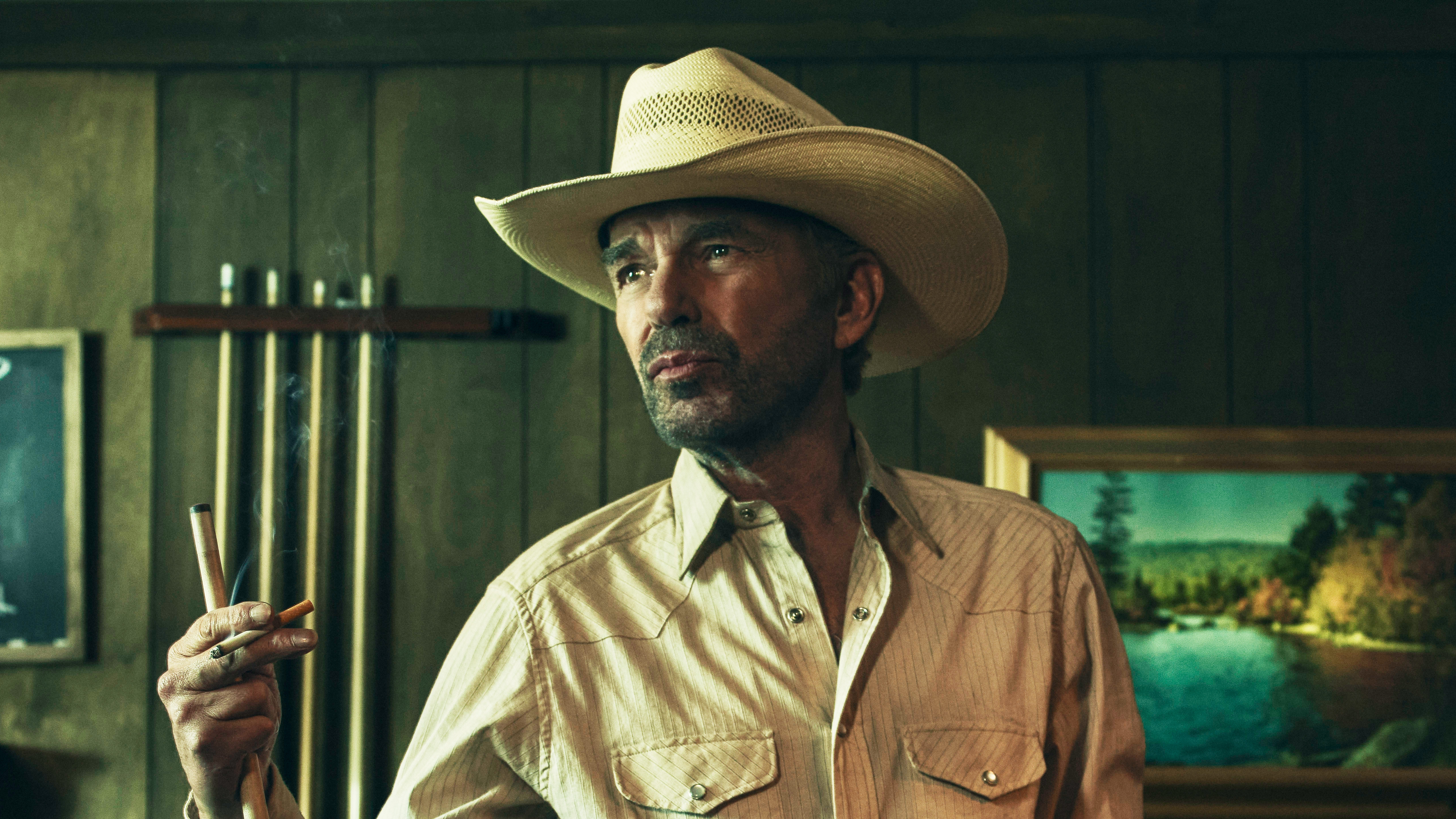
The Roots of ‘Landman’: Sheridan’s Vision and Thornton’s Fit
To understand Thornton’s defense, one must first grasp the essence of “Landman.” Based loosely on the Texas Monthly podcast “Boomtown,” the series dives into the Permian Basin’s oil frenzy, where fortunes are made and lives are shattered overnight. Sheridan, a Texas native with a penchant for Western-tinged narratives, crafts stories that celebrate individualism while critiquing societal hypocrisies. In “Landman,” this manifests in Tommy’s world-weary monologues, where he dissects everything from renewable energy to daytime TV with acerbic wit.
Thornton, who hails from Hot Springs, Arkansas, was a natural fit for the role. In interviews, he recounts how Sheridan approached him at the “1883” premiere, where Thornton had a cameo as Marshal Jim Courtright. “When Taylor talked to me about it… I could tell right away that it was probably going to be something I would really want to do,” Thornton shared. “When I read the first script, I was pretty blown away because he writes people and the way people talk and the crazy things they do.” Thornton’s own background—growing up in a modest Southern family, with early jobs ranging from waiter to asphalt layer—informs his portrayal. He sees Tommy not as a caricature but as a composite of the tough, resilient folks he’s encountered in rural Arkansas and Texas. “That’s probably what I would be like,” he admitted, underscoring his commitment to roles that feel genuine.
The show’s authenticity extends to its production. Filmed in Fort Worth and surrounding areas, “Landman” incorporates real oil workers as extras, lending credibility to scenes of rig operations and barroom brawls. Sheridan, known for his hands-on directing style, eschews heavy rehearsals, preferring spontaneous performances that capture raw emotion. Thornton praised this approach: “We had a mutual respect… He likes to cast people sometimes that are just somebody he met at the ice cream store.” This method contributes to the series’ abrasive feel, where dialogue flows naturally, often laced with profanity that mirrors blue-collar banter.
Mounting Criticisms: Too Harsh for Comfort?
Despite its strong viewership—Season 1 averaged millions of streams on Paramount+— “Landman” has faced sharp rebukes. Reviewers have called out its portrayal of women as particularly problematic. In The Guardian, Lucy Mangan described the series as “absolutely packed with zingers” but lambasted its “repellent” attitude toward female characters. Tommy’s ex-wife Angela (Ali Larter) is often shown in flirtatious, revealing scenarios, while his daughter Ainsley stirs trouble among roughnecks in skimpy outfits. A female attorney, Rebecca Savage, endures Tommy’s sarcastic barbs, including jabs at her appearance: “Hats off to the plastic surgeon.” Mangan argues this caters to a “pre-woke” male fantasy, where women exist to tantalize or be mocked.
Beyond gender dynamics, the show’s political undercurrents have ignited controversy. A viral clip from Episode 2 features Tommy dismantling the “clean” myth of renewable energy. Responding to a query about wind turbines powering oil wells, he retorts: “You have any idea how much diesel will have to burn to mix that much concrete or make that steel?… In its 20-year lifespan, it won’t offset the carbon footprint of making it.” Shared widely on X (formerly Twitter), the scene drew praise from conservatives for its pro-oil stance but criticism from environmentalists who fact-checked the claims, noting wind turbines’ carbon payback period is often 6 months to two years.
Another flashpoint came in Season 2, Episode 5, where Tommy mocks “The View” as “a bunch of pissed-off millionaires bitching about how much they hate millionaires and Trump and men and you and me.” This Sheridan-penned dig at the ABC talk show—whose hosts include Whoopi Goldberg and Joy Behar—escalated the culture war narrative, with some viewing it as unnecessary provocation. Critics argue these elements make “Landman” feel abrasive, prioritizing shock over substance.
Audience reactions are polarized. On social media, fans defend the harshness: “If you’ve been in the oil patch, you know most of this stuff is true to life,” one commenter noted. Others decry it as outdated machismo. Reddit threads, like one in r/skeptic, accuse the show of misleading propaganda, particularly in monologues that echo oil industry talking points.

Thornton’s Clarification: Authenticity Over Apology
Faced with this backlash, Thornton remains unapologetic. In promotional interviews, he clarifies that the show’s edge isn’t for shock value but fidelity to reality. “The characters aren’t exaggerated… they reflect the oil towns, back roads, and working-class grit he’s known across Arkansas and Texas,” he explained. Born in 1955 in Arkansas, Thornton draws from personal experiences: his father’s job as a high school history teacher and basketball coach, his own struggles in Hollywood’s early days. This background fuels his belief that stories should capture life’s unvarnished truths. “These are people shaped by physical labor, economic pressure, and environments where survival outweighs sentimentality,” he said. “Conversations are blunt. Decisions are hard. Consequences linger.”
Thornton contrasts “Landman” with polished TV fare, arguing it “isn’t designed to soothe viewers. It doesn’t polish rough edges or soften personalities for mass appeal.” He credits Sheridan’s writing for this: “He writes people and the way people talk.” In one interview, Thornton joked about his character’s profanity: “Billy Bob has a unique way of saying the F-word,” echoing fan sentiments. But beneath the humor is a serious defense of moral complexity. “If the world it portrays feels unforgiving, that’s because sometimes it is,” he asserted.
Co-stars echo this. Ali Larter, playing Angela, described Thornton as “generous,” noting their sparring scenes lift the material. “He’s there to do my off-camera… to have him as a sparring partner is such a gift.” This collaborative spirit underscores the show’s commitment to realism.
The Oil Industry’s Real Grit: Arkansas and Texas Backdrops
Thornton’s references to Arkansas and Texas aren’t mere rhetoric; they ground “Landman” in historical and cultural context. Arkansas’s oil history dates to the early 20th century, with booms in El Dorado and Smackover transforming sleepy towns into hubs of wealth and vice. Texas’s Permian Basin, the show’s setting, produces over 40% of U.S. oil, employing thousands in grueling jobs where accidents are common and paychecks volatile.
Images of these landscapes—towering rigs against vast skies—evoke the harsh beauty Thornton defends.

Workers in these areas face economic pressures: boom-bust cycles, environmental risks, and cartel influences, as depicted in the show. Thornton’s insistence on authenticity highlights overlooked narratives. “The only bad thing about Landman is sometimes they forget to take his pickup out of park when he is driving it,” a fan quipped, but many agree: “Everybody I know that has watched the show absolutely loves it.”
Yet, criticisms persist. The renewable energy rant, while viral, has been debunked for inaccuracies, raising questions about whether “authenticity” veils bias. Similarly, the “View” jab feels like a cheap shot, alienating viewers.
Cultural Impact: Sparking Debate in a Divided Era
“Landman” has ignited a culture war, with its unfiltered lens on American life. Conservatives hail it as a counter to “woke” Hollywood, while progressives see it as regressive. Thornton, no stranger to controversy—from his infamous “tomatoes” interview on Q TV to his music career—thrives in this space. His stance: “I’m not apologizing for reality.”
The show’s success—renewed for Season 2 before Season 1 ended—suggests audiences crave this grit. As Thornton put it, “Landman is the best thing on TV right now!” echoing fan enthusiasm. But it also prompts reflection: Does authenticity justify abrasiveness?
:max_bytes(150000):strip_icc()/LANDMAN-s1-ep9-Billy-Bob-Thornton-011025-2d63b1def620430a8c1e5e72695ec4f0.jpg)
Landman’ star Billy Bob Thornton on filming possible season 2
Legacy of Unflinching Storytelling
Thornton’s career—from Oscar-winning “Sling Blade” to “Fargo”—is defined by complex characters. In “Landman,” he continues this, refusing to soften for comfort. As debates rage, his clarification stands: Reality is harsh, and art should reflect it. Whether viewers embrace or reject it, “Landman” forces confrontation with uncomfortable truths. For Thornton, that’s the point—no apologies needed.


