
The political and public fallout surrounding the brutal murder of 18-year-old student Henry Nowak has escalated significantly, with right-leaning media commentators formally demanding the release of police bodycam footage to expose what they claim is a systemic, ideologically driven failure by law enforcement.
The case centers on the conviction of Vikram Digua, a Sikh man who stabbed Nowak five times with a ceremonial knife before falsely claiming to responding officers that Nowak had racially abused him.
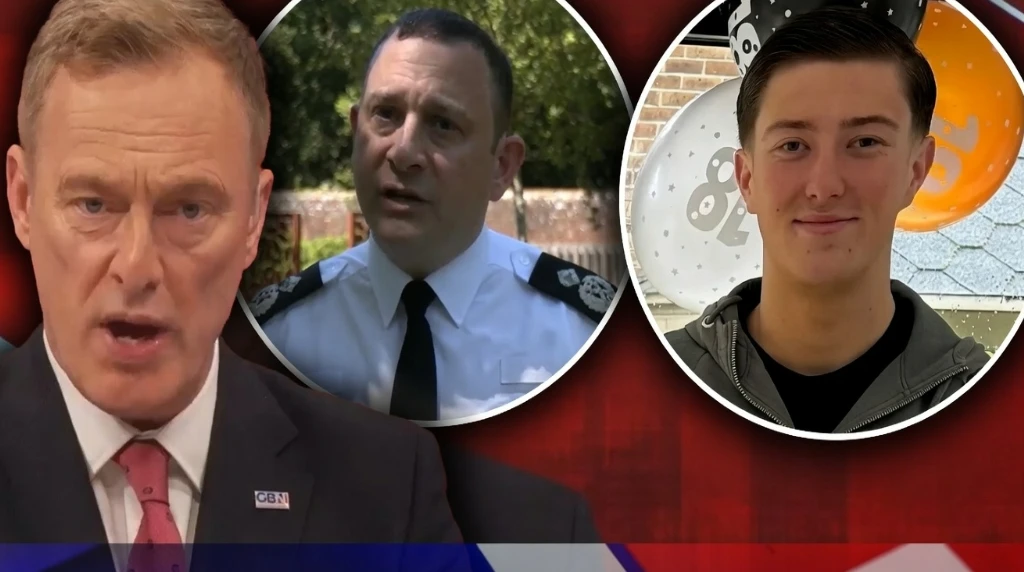
The Police Failure and the Apology
The core of the controversy stems from the actions of Hampshire Police upon arriving at the scene. Based on Digua’s false allegation of racism, officers ignored the bleeding Nowak’s claims that he had been stabbed and handcuffed the dying teenager. It took officers three minutes, and Nowak losing consciousness, before first aid was administered.
Following the guilty verdict, Hampshire Police Deputy Chief Constable Robert France issued a public apology, acknowledging that officers handcuffed the teenager as he bled to death, while noting that a pathologist confirmed the injuries were fatal regardless of intervention.
“Sorry Doesn’t Cut It”: The Media Backlash
The apology was immediately rejected by prominent conservative media figures. On GB News, host Martin Daubney led a furious critique of the police response, declaring: “I don’t think sorry is going to cut it.”
The broadcast painted the incident as a catastrophic failure induced by political correctness. Daubney, alongside Home and Security Editor Mark White, argued that the officers were so terrified of being labeled “institutionally racist” that they blindly accepted a false accusation of racism from a “brown-skinned man” over the desperate pleas of a dying white teenager.
“I honestly believe we’re at a point where the police are so captured by the desire not to be branded as institutionally racist… that they have got to be so alive to the possibility that people may have been racially abused… that that somehow is the most serious crime you could ever have,” White argued on air.
Demands for Transparency and “Double Standards”
The anger has now coalesced into a formal demand for transparency. Daubney used the broadcast to demand the immediate, unedited release of the police bodycam footage from the incident, stating the public needs to “hear what the conversations were” to understand how deeply the police “let us down.”
Furthermore, commentators are aggressively pointing to what they perceive as a gross societal double standard. Daubney argued that if the racial dynamics were reversed—if a black teenager had been ignored by police and left to die while a white attacker claimed self-defense—the resulting public outcry would be unprecedented.
“Our cities would be burning right now,” Daubney asserted, criticizing the “deafening silence” from politicians, celebrities, and the “chattering class” regarding Nowak’s death.
Broader Societal Critiques
The GB News segment also targeted Digua’s family, noting that the killer’s brother helped fabricate the racist lie and his mother was found guilty of removing the murder weapon from the scene.
Guest commentator David Chippy escalated the political rhetoric, arguing that the police’s reaction exposes a “dark destructive lie” at the heart of multicultural Britain. Chippy argued that an excessive police focus on anti-racism actively empowers and emboldens violent individuals to weaponize accusations of racism to escape justice.
As public pressure mounts, Hampshire Police and national law enforcement leadership are facing an unprecedented crisis of confidence from right-leaning segments of the electorate, who view the Nowak tragedy as definitive proof that ideological policing has compromised basic public safety.


