
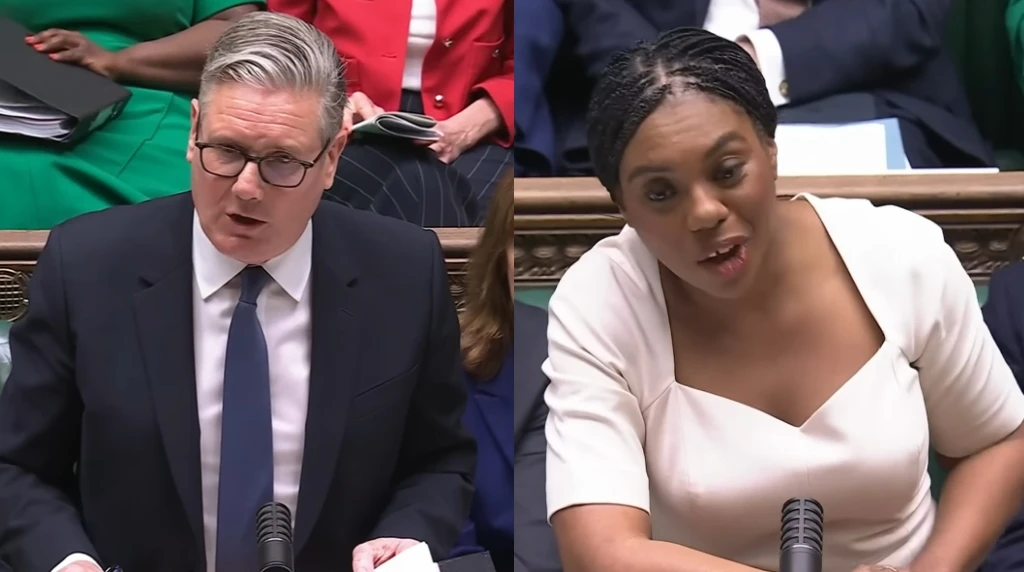
A fiery confrontation unfolded in the House of Commons during Prime Minister’s Questions (PMQs), as Opposition Leader Kemi Badenoch relentlessly pressed Prime Minister Keir Starmer over his decision to appoint Peter Mandelson. The clash centred on allegations of national security failures, disregard for proper vetting procedures, and culminated in renewed calls for the Prime Minister’s resignation.
Dispute Over Appointment Process
At the heart of the row was whether the Prime Minister had followed “due process” in appointing Mandelson. Badenoch pointed out that in November 2024, then-Cabinet Secretary Simon Case had issued written advice stating that “necessary security clearances must be obtained before confirming the Prime Minister’s choice.” Ignoring this guidance and proceeding with the appointment, she argued, put national security at risk.
Starmer firmly defended his position, insisting that conducting security vetting after announcing an appointment—but before the individual formally takes up the role—is “standard practice” for external candidates. He cited remarks from Olly Robbins to support his claim that proper procedures had been followed.
National Security Concerns and Kremlin Links
Badenoch escalated her attack by highlighting claims that early vetting had identified Mandelson as having remained on the board of Sistema, a Russian defense-linked company with ties to the Kremlin, long after Vladimir Putin’s 2014 annexation of Crimea. She challenged the Prime Minister directly: “Why would he want someone with Kremlin links as our ambassador to Washington?”
The opposition also cited Robbins’ earlier testimony that Mandelson had been granted access to high-level classified intelligence before passing full security checks. Starmer responded that this was permissible due to Mandelson’s status as a member of the House of Lords and the Privy Council—an explanation met with laughter and dismissed by critics as “a joke.”
Blame-Shifting and Calls to Resign
Throughout the session, Starmer maintained that he had been the victim of withheld information within the civil service. He stated that the UK Security Vetting body had raised “red flags” and recommended denying Mandelson security clearance, but that this “extremely concerning” information had not been passed on to him. He described the failure as “a very serious error of judgment,” which led to the dismissal of the head of the Foreign Office.
Badenoch rejected this defense, accusing the Prime Minister of using officials as “human shields” to cover his own failures. “He knows he did not follow the process, yet he told the House that he did… Everyone knows the consequences of misleading Parliament,” she declared, demanding his resignation.
Starmer Hits Back
In a combative closing response, Starmer hit back, accusing the Opposition Leader of being “wrong, wrong, wrong” and of rushing to judgment. He insisted that he had been elected to fix 14 years of failures by the previous government, stating: “Whatever she says, whatever noise they make, nothing will distract me from delivering for our country.”
This latest PMQs session underscores the intense pressure facing Starmer’s government, as it struggles to contain one of the most serious crises of confidence since taking office—highlighting deep divisions at the heart of Westminster.


