
PARLIAMENT CLASHES OVER FREE SPEECH AS POLICE DIRECTED TO LOG “ILLEGITIMATE” DISCUSSIONS OF ISLAM
A fierce debate over freedom of expression and religious criticism has erupted in the House of Commons, triggered by controversial new policing guidelines in South Wales. The government is under mounting pressure to clarify its stance on civil liberties after it was revealed that police are instructed to record criticisms of Islam that go beyond “legitimate discussion,” even when no legal offense has been committed.
The heated exchange highlights a growing political fault line regarding where the boundary lies between protecting minority communities from hate speech and preserving the fundamental right to criticize religion.
The Core Confrontation
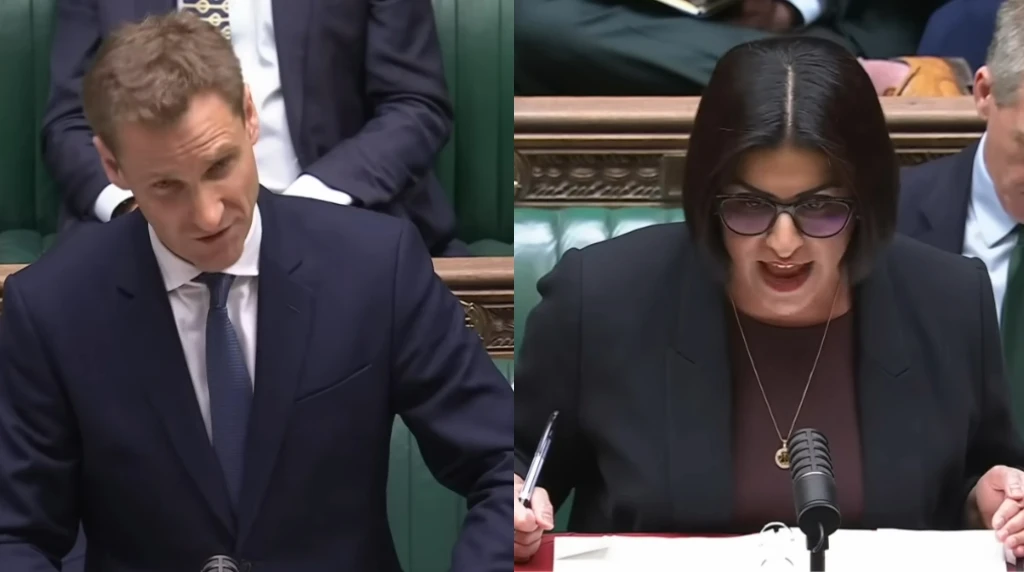
The controversy was brought to the forefront during a tense parliamentary session by the Shadow Home Secretary, Chris Philp, who aggressively questioned the current Home Secretary over the South Wales Police’s internal guidance.
Philp revealed that local police staff have been directed to record anything that exceeds what authorities deem “legitimate discussion of Islam” . Crucially, Philp emphasized that these incidents are to be recorded even if there is absolutely no crime committed.
The primary concern raised by the opposition is the real-world consequence of such police logging. Individuals flagged under this guidance could have these non-crime incidents disclosed on their Disclosure and Barring Service (DBS) checks . A DBS check is standard for employment in the UK, meaning that a subjectively logged “illegitimate” discussion could effectively hinder a citizen’s ability to secure a job.
Accusations of “Stealth Blasphemy Laws”
The Shadow Home Secretary framed the police guidance as a direct threat to free speech, arguing that it essentially resurrects blasphemy laws that the UK Parliament had previously abolished.
“Police officers in South Wales will now have to decide what is or is not legitimate discussion of Islam,” Philp stated, noting the inherent danger in allowing law enforcement to arbitrate religious debate. He further pointed out a perceived double standard, asserting, “No other religion is treated that way in South Wales.”
Reiterating the opposition’s stance on civil liberties, Philp pressed the Home Secretary for a definitive answer: “Criticizing religion is part of free speech. So does the Home Secretary agree that this guidance is wrong and should be immediately scrapped? Let’s try a simple yes or no”.
Government Deflection
Despite the direct line of questioning, the Home Secretary refused to deliver a “yes or no” answer regarding whether the South Wales Police guidance should be scrapped.
Instead, the Home Secretary deflected the criticism by attacking the previous Conservative government’s track record. Dismissing Philp’s demands, the Home Secretary stated: “Given that he represents a party and a former government that didn’t take any action at all either on dealing with hate crimes, anti-Muslim hatred, or other forms of hatred, I’m not going to take any lessons from him” .
Rather than addressing the specific nuances of the DBS checks or the definition of “legitimate discussion,” the Home Secretary concluded with a broad, standardized commitment to impartial policing. “Let me just make very clear from this dispatch box: the police, wherever they are—South Wales or anywhere else—must always police without fear or favor. And we are all, and must always be, equal before the law”.
Broader Political Implications
This parliamentary clash exposes a highly sensitive vulnerability for the current Labour government. On one side, the administration is attempting to demonstrate a robust commitment to combatting Islamophobia and protecting minority communities. On the other, it faces accusations from critics who argue that defining “Islamophobia” too broadly leads to a chilling effect on free speech, effectively creating blasphemy laws through the back door via Non-Crime Hate Incidents (NCHIs).
As the story develops, all eyes will be on whether the Home Office will intervene in the South Wales Police’s operational guidance, or if this incident will set a precedent for how religious criticism is logged by law enforcement nationwide.


